

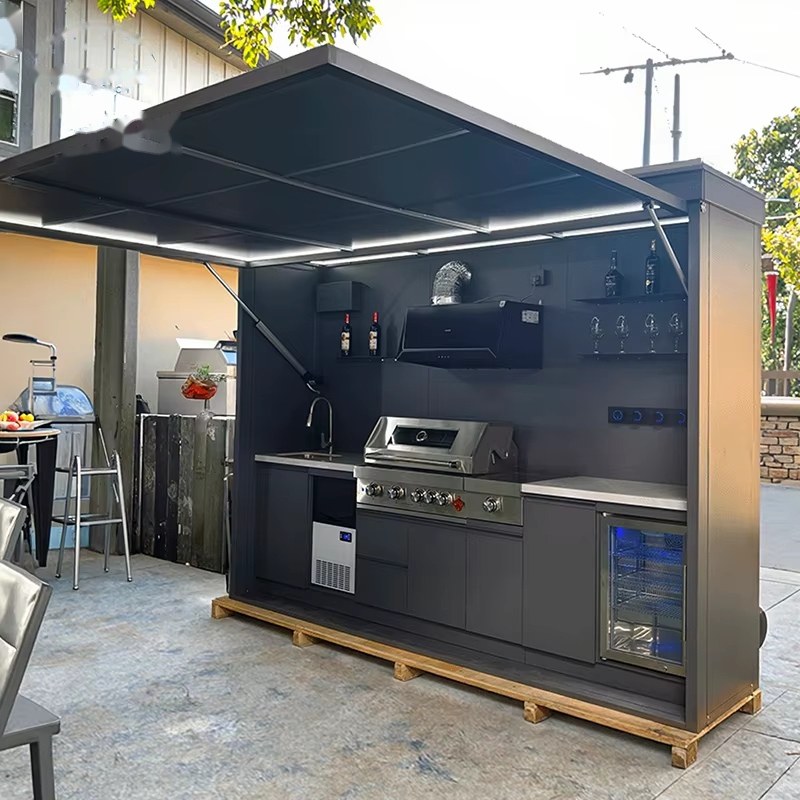
Coastal outdoor kitchen cabinets need a project-specific specification. Salt, humidity, wind-driven rain and cleaning chemicals can affect panels, hardware, fasteners and appliances differently. Distance from the coast alone does not describe the complete exposure.
.png)
Document the actual exposure
Record the distance and orientation to salt water, whether the cabinet is sheltered, the direction of prevailing wind, pool-chemical exposure, drainage and how often the property is occupied. A covered terrace and an open beachfront deck in the same town may need different details.
Site photos and a maintenance plan are more useful than broad labels such as “marine grade.”
Choose material as part of the complete system
Cubox primarily uses 304 stainless steel in its current covered cabinet range. Aluminum options may be available for selected projects where weight, finish or installation requirements make them appropriate.
For either material, review the panels, frame, coating or surface treatment, hinges, drawer hardware, fasteners, joints and drainage together. Request project-specific documentation for any upgraded material or finish rather than relying on an unsupported lifespan claim.
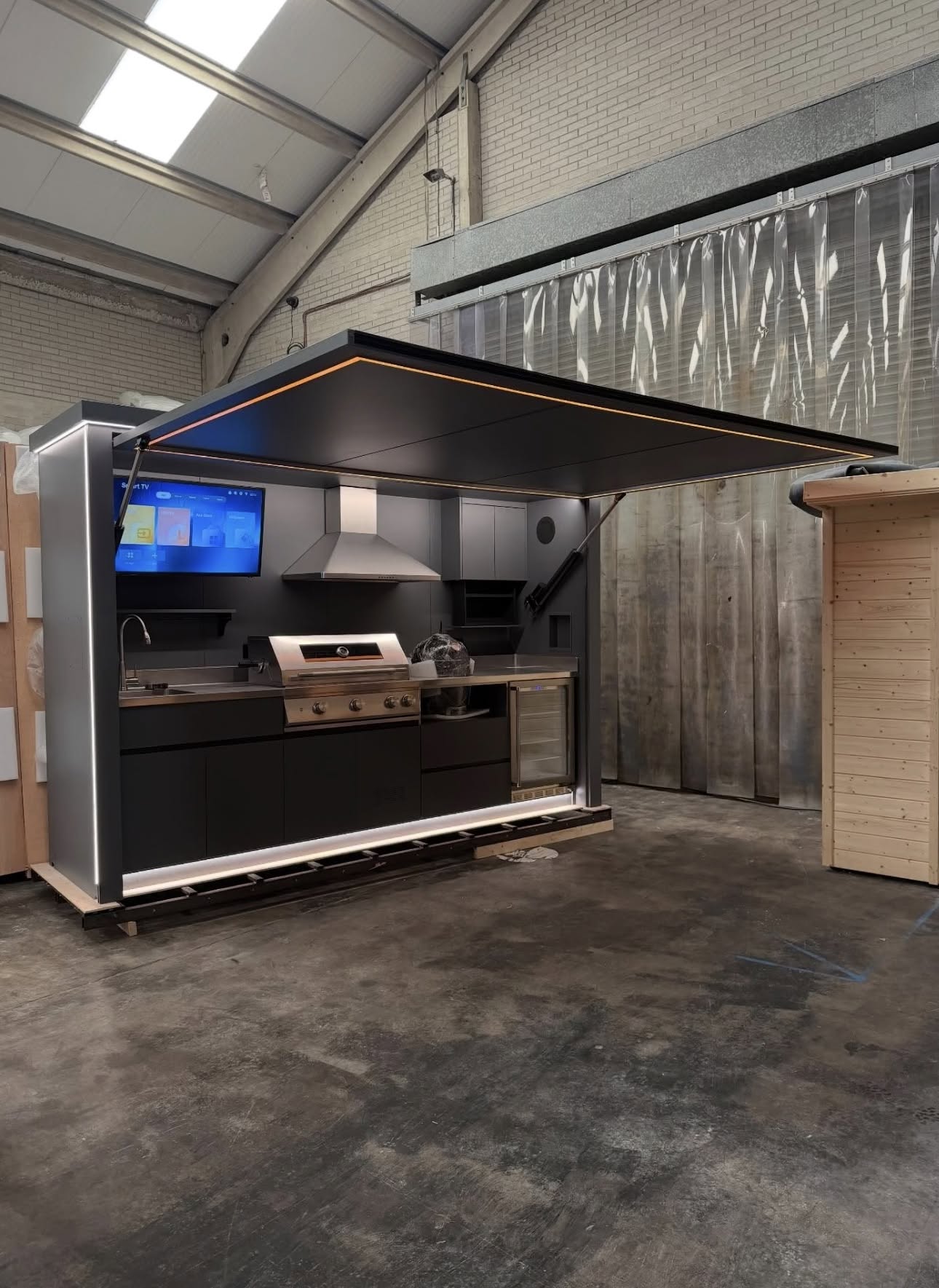
Pay attention to hardware and mixed metals
Hinges, slides, handles, fasteners and cover mechanisms are exposed to touch, grease, moisture and airborne salt. Confirm their materials and replacement access. Where different metals meet, the construction details should reduce trapped moisture and unintended contact.
Hardware choices should be recorded on the approved project specification, especially when the site requires an upgrade from the standard configuration.
Drainage and cleaning access matter
Standing water and salt deposits can remain in joints, corners and hardware even when the exterior looks dry. Review drainage paths, door seals, appliance openings and access for cleaning. The cabinet should be positioned so water can leave the area without collecting around the base.

Set a realistic maintenance plan
Cleaning frequency depends on exposure and use. Fresh-water cleaning can help remove salt and cooking residue, but the method must suit the finish, appliances and electrical components. Follow the care information supplied for the specific cabinet and appliance configuration.
Inspect finish damage, fasteners, hinges, seals and drainage regularly. Addressing a small scratch or loose fitting is easier than repairing damage after salt and moisture have remained in the area.
Coordinate appliances and utilities
Use the approved appliance technical sheets to confirm cut-outs, ventilation, service clearances and connections. Electrical components, gas equipment, water and drainage must be selected and installed for the local project requirements.
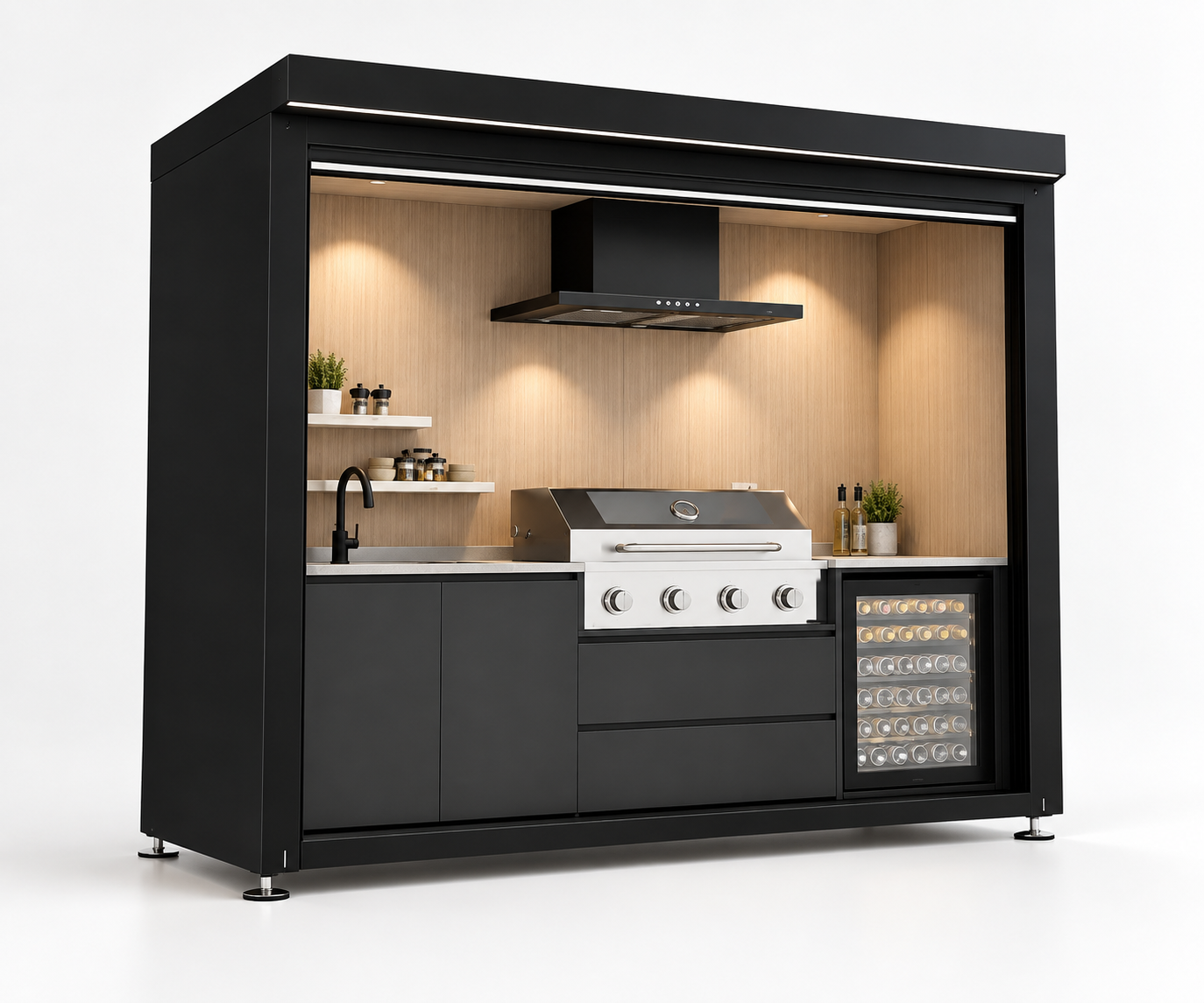
Information to send for a coastal quotation
- site location, orientation and photos;
- distance and exposure to salt water or pool chemicals;
- cabinet position and shelter conditions;
- appliance list and utility details;
- preferred material and finish;
- maintenance expectations, quantity and destination.
Cubox can compare the information with the current covered cabinet range and confirm available project options. Send the details through the contact page.
Talk to Our Outdoor Kitchen Cabinet Team
Send Your Outdoor Kitchen Project Details
Use this area for cabinet layout questions, material selection, project coordination, and quote preparation.
