

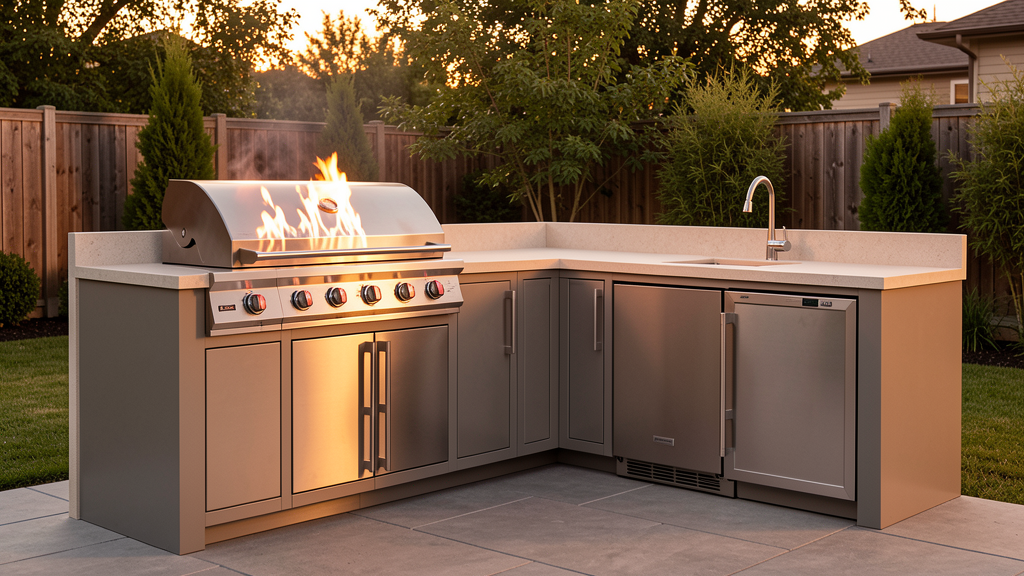
Outdoor Kitchen Appliances Guide 2026: What to Buy and What to Skip
Choosing the right appliances makes or breaks your outdoor kitchen. The wrong choices lead to rust, poor performance, and wasted money. The right choices deliver years of reliable cooking and entertainment.
In this comprehensive guide, we break down every essential outdoor kitchen appliance for 2026 — from must-haves to nice-to-haves. We’ll cover what to look for, what to avoid, and how to match appliances to your climate, budget, and cooking style.
The 5 Must-Have Outdoor Kitchen Appliances
These are the non-negotiable appliances that every functional outdoor kitchen needs.
1. Outdoor-Rated Grill
Why it’s essential: The grill is the heart of any outdoor kitchen. It’s where you’ll spend most of your time cooking and entertaining.
What to look for:
– BTU output: 30,000-40,000 BTUs for residential use
– Cooking surface: 400-600 square inches for families, 600+ for entertainers
– Material: 304 stainless steel (resists rust better than 430 grade)
– Burners: At least 3 main burners plus a side burner
– Ignition: Electronic ignition (push-button or rotary)
What to avoid:
– Cast iron grates in coastal areas (they rust quickly)
– Painted or powder-coated exteriors near saltwater
– Grills without a warranty of at least 5 years
Budget: $800 – $3,000+ for quality residential grills
Top picks for 2026:
– Best overall: Lynx Professional 36″ Grill ($2,500)
– Best value: Napoleon PRO500 ($1,800)
– Best for coastal areas: Danver 304 Stainless Grill ($2,200)
2. Outdoor Refrigerator
Why it’s essential: You need a place to store drinks, prep ingredients, and keep food cold without running back to the indoor kitchen.
What to look for:
– Outdoor rating: Must be rated for outdoor use (IP rating or “outdoor rated” label)
– Temperature range: 34-110°F operating range (handles hot days)
– Material: 304 stainless steel or powder-coated aluminum
– Size: 15-24 cubic feet for most families
– Features: Reversible door, adjustable shelves, lock option
What to avoid:
– Indoor refrigerators (they’ll fail in heat and humidity)
– Glass-front models in direct sunlight (poor insulation)
– Units without UV-resistant finishes
Budget: $800 – $2,500
Top picks for 2026:
– Best overall: Danver Outdoor Refrigerator ($1,900)
– Best value: Everdure by Heston Blumenthal 24″ ($1,400)
– Best compact: Summit Outdoor 15″ Undercounter ($1,200)
3. Outdoor Sink
Why it’s essential: A sink makes cleanup easy and keeps you from tracking grease and food through your house.
What to look for:
– Material: 16-18 gauge stainless steel (durable, rust-resistant)
– Size: Single bowl (18″x16″) or double bowl (24″x18″)
– Faucet: Pull-down sprayer with hot and cold water
– Drainage: Proper P-trap and venting to prevent odors
What to avoid:
– Copper or brass sinks (they patina and require maintenance)
– Plastic or composite sinks (they crack in freezing weather)
– Faucets without frost-proof valves in cold climates
Budget: $400 – $1,200 (including faucet and plumbing)
Top picks for 2026:
– Best overall: Blanco 16″ Stainless Sink ($350)
– Best value: Kohler Outdoor Sink ($280)
– Best premium: Ruvati 18″ Undermount ($450)
4. Storage Cabinets
Why they’re essential: You need a place to store tools, fuel, cleaning supplies, and cooking accessories.
What to look for:
– Material: Aluminum or 304 stainless steel (rust-proof)
– Construction: Welded frames (not riveted) for strength
– Finish: Powder-coated for UV and weather resistance
– Features: Adjustable shelves, soft-close hinges, lockable doors
What to avoid:
– Wood cabinets (they warp and rot outdoors)
– Steel cabinets without proper coating (they rust)
– Cabinets without drainage holes (water pools inside)
Budget: $1,500 – $5,000+ for a complete set
Top picks for 2026:
– Best overall: Cubox OKC Series Aluminum Cabinets ($2,500-$7,500)
– Best value: Danver Starter Series ($1,800)
– Best premium: Trex Outdoor Cabinets ($4,500+)
5. Countertops
Why they’re essential: You need durable, weather-resistant surfaces for prep, plating, and serving.
What to look for:
– Material: Granite, quartz, or tile (all weather-resistant)
– Thickness: At least 2cm (3cm preferred for durability)
– Finish: Honed or leathered (polished shows water spots)
– Edge profile: Eased or beveled (sharp edges chip easily)
What to avoid:
– Marble (it stains and etches from acids)
– Laminate (it delaminates in heat and moisture)
– Concrete without proper sealing (it cracks and stains)
Budget: $40 – $150 per square foot (installed)
Top picks for 2026:
– Best overall: Granite ($60-$100/sq ft)
– Best value: Porcelain Tile ($40-$70/sq ft)
– Best premium: Quartz ($80-$150/sq ft)
The 7 Nice-to-Have Outdoor Kitchen Appliances
These appliances aren’t essential, but they elevate your outdoor kitchen from functional to exceptional.
6. Side Burner
Why it’s useful: Cook side dishes, boil water, or simmer sauces without using the grill.
What to look for:
– BTU output: 12,000-15,000 BTUs
– Cover: Lid to protect when not in use
– Material: Cast brass or stainless steel burners
Budget: $200 – $600
Best for: Families who cook full meals outdoors
7. Pizza Oven
Why it’s useful: Make restaurant-quality pizza, roast vegetables, or sear meats with high heat.
What to look for:
– Fuel type: Wood-fired (authentic flavor) or gas (convenient)
– Temperature range: 700-900°F for proper pizza cooking
– Material: Refractory brick or stainless steel
– Size: 32-40 inch diameter for most homes
Budget: $1,500 – $5,000
Best for: Entertainers and pizza lovers
8. Smoker
Why it’s useful: Low-and-slow cooking for brisket, ribs, and pulled pork.
What to look for:
– Type: Offset, vertical, or pellet smoker
– Capacity: 500-1,000 cubic inches for most families
– Material: Heavy-gauge steel (retains heat better)
– Features: Digital temperature control, multiple racks
Budget: $800 – $3,000
Best for: BBQ enthusiasts and competitive cooks
9. Ice Maker
Why it’s useful: Keep drinks cold without buying bags of ice.
What to look for:
– Production: 25-35 lbs per day
– Storage: 6-10 lb capacity
– Outdoor rating: Must be rated for outdoor use
– Size: 15″ or 18″ undercounter model
Budget: $1,200 – $2,500
Best for: Frequent entertainers and hot climates
10. Beverage Center
Why it’s useful: Dedicated space for drinks, wine, and bottled beverages.
What to look for:
– Temperature zones: Dual-zone for wine and beer
– Capacity: 50-150 bottles
– Features: Glass door, LED lighting, lock option
Budget: $1,500 – $3,500
Best for: Wine collectors and entertainers
11. Dishwasher
Why it’s useful: Clean dishes and glasses without running back inside.
What to look for:
– Outdoor rating: Must be rated for outdoor use
– Size: 18″ or 24″ width
– Features: Stainless steel interior, adjustable racks
Budget: $800 – $1,800
Best for: Large families and frequent entertainers
12. Trash/Recycling Center
Why it’s useful: Keep waste organized and out of sight.
What to look for:
– Configuration: 2-3 compartments (trash, recycling, compost)
– Material: Stainless steel or powder-coated aluminum
– Features: Soft-close lids, odor control
Budget: $300 – $800
Best for: Everyone (it’s a small investment for big convenience)
Appliances to Skip (Unless You Have Specific Needs)
These appliances sound great in theory but aren’t worth the investment for most homeowners.
❌ Outdoor Microwave
Why to skip: Most people don’t use it. Microwaves don’t perform well outdoors (humidity, temperature swings), and they take up valuable counter space.
Exception: If you have a large family and reheating food is a daily need.
❌ Deep Fryer
Why to skip: Safety hazard outdoors (wind, rain, insects). Deep fryers require constant attention and stable conditions.
Exception: If you’re a serious Cajun cook and have a protected area.
❌ Outdoor Coffee Maker
Why to skip: Most coffee makers aren’t rated for outdoor use. They’ll fail quickly from humidity and temperature changes.
Exception: If you have a fully enclosed, climate-controlled outdoor kitchen.
❌ Warming Drawer
Why to skip: Most outdoor cooking is done fresh. Warming drawers take up space and rarely get used.
Exception: If you’re cooking for large groups (20+ people) and need to hold food.
How to Match Appliances to Your Climate
Different climates demand different appliance choices. Here’s what to prioritize:
Tropical/Coastal Climates
Priority: Rust resistance and UV protection
Recommended:
– 304 stainless steel grills and cabinets
– Marine-grade hardware
– Powder-coated aluminum cabinets (Cubox OKC Series)
– Covered appliances or appliance covers
Avoid:
– Cast iron components
– Uncoated steel
– Wood cabinets
Desert/Arid Climates
Priority: Heat resistance and UV protection
Recommended:
– High-temperature rated refrigerators (up to 120°F)
– UV-resistant countertops (granite, quartz)
– Shade structures for appliances
– Stainless steel with matte finish (reduces heat absorption)
Avoid:
– Dark-colored appliances (they absorb heat)
– Plastic components (they become brittle)
– Glass-front refrigerators in direct sun
Cold/Snowy Climates
Priority: Freeze protection and winterization
Recommended:
– Frost-proof faucets and valves
– Drainable water lines
– Insulated appliance covers
– Indoor storage for portable appliances
Avoid:
– Water features without drainage
– Appliances without cold-weather ratings
– Countertops that crack in freeze-thaw cycles
Temperate/Mixed Climates
Priority: Versatility and all-weather performance
Recommended:
– All-weather rated appliances
– Retractable covers or pergolas
– Modular systems that can be adjusted seasonally
– Stainless steel with proper drainage
Avoid:
– Appliances rated for only one climate extreme
– Fixed installations without weather protection
Budget Breakdown: What to Spend Where
Here’s how to allocate your appliance budget for maximum value:
Budget-Friendly Setup ($5,000 – $8,000)
Priority: Essentials only
- Grill: $1,200 (Napoleon PRO500 or similar)
- Refrigerator: $1,000 (Summit 15″ undercounter)
- Sink: $400 (basic stainless with faucet)
- Cabinets: $1,500 (Cubox OKC-005 starter set)
- Countertop: $900 (15 sq ft of granite)
Total: $5,000
Mid-Range Setup ($10,000 – $15,000)
Priority: Quality essentials + 1-2 upgrades
- Grill: $2,000 (Lynx or high-end Napoleon)
- Refrigerator: $1,500 (Danver 24″)
- Sink: $600 (premium stainless with pull-down faucet)
- Cabinets: $3,000 (Cubox OKC-006 mid-range set)
- Countertop: $1,500 (25 sq ft of granite or quartz)
- Side burner: $400
- Storage upgrades: $1,000
Total: $10,000
Premium Setup ($20,000 – $30,000)
Priority: Full appliance suite + luxury features
- Grill: $3,000 (Lynx Professional or Heston Blumenthal)
- Refrigerator: $2,000 (Danver 24″ premium)
- Sink: $800 (Ruvati undermount with premium faucet)
- Cabinets: $6,000 (Cubox OKC-007 premium set)
- Countertop: $3,000 (40 sq ft of quartz)
- Side burner: $500
- Pizza oven: $2,500
- Ice maker: $1,800
- Lighting and accessories: $400
Total: $20,000
Frequently Asked Questions
Can I use indoor appliances outdoors?
No. Indoor appliances aren’t rated for outdoor conditions (humidity, temperature swings, UV exposure). They’ll fail quickly and void the warranty. Always choose appliances specifically rated for outdoor use.
What’s the most important appliance to invest in?
The grill. It’s the centerpiece of your outdoor kitchen and gets the most use. Invest in a high-quality grill with a good warranty (at least 5 years).
How do I protect appliances from weather?
- Use appliance covers when not in use
- Install a pergola or pavilion for overhead protection
- Choose rust-proof materials (aluminum, stainless steel)
- Drain water lines before freezing weather
- Store portable appliances indoors during extreme weather
Do I need a vent hood for my outdoor grill?
It depends. If your grill is under a covered structure (pergola, pavilion), you need ventilation to prevent smoke buildup. If it’s fully open-air, a vent hood is optional but recommended for comfort.
What’s the best fuel type for outdoor grills?
- Natural gas: Most convenient (no refills), requires gas line installation
- Propane: Portable and easy to install, requires tank refills
- Charcoal: Authentic flavor, requires more cleanup and attention
- Pellet: Versatile (grill, smoke, bake), requires electricity and pellet refills
Recommendation: Natural gas for convenience, propane for flexibility, charcoal for flavor.
How often should I clean and maintain outdoor appliances?
- After each use: Clean grill grates, wipe down surfaces
- Monthly: Deep clean grill interior, check for rust or damage
- Seasonally: Inspect seals, gaskets, and electrical connections
- Annually: Professional service for gas appliances, reseal stone countertops
Conclusion: Choose Appliances That Match Your Lifestyle
The right outdoor kitchen appliances transform your backyard into a functional, enjoyable space. Focus on quality essentials (grill, refrigerator, sink, cabinets, countertops) and add upgrades based on your cooking style and budget.
Key takeaways:
1. Invest in outdoor-rated appliances (never use indoor appliances outside)
2. Prioritize rust-resistant materials for coastal or humid climates
3. Match appliance capacity to your cooking and entertaining needs
4. Allocate budget wisely: spend more on the grill, save on accessories
5. Plan for maintenance and weather protection from day one
Ready to outfit your outdoor kitchen? Explore the Cubox Outdoor Kitchen Collection for durable, weather-resistant cabinets and appliances designed for every climate.
Request a free consultation to discuss your appliance needs with our design team.